

Gamified Learning vs Traditional Textbook Drills: Navigating the future of knowledge retention

"Remember the childhood joy of playing traditional games like Paramapadam or Chess, where every move required strategy, resilience, and ethical choices? Contrast that with the monotonous rote memorization of textbook pages before an exam. Today, modern education stands at a pivotal crossroad. By understanding how interactive gamification and structured discipline balance each other, you can transform your personal study habits and foster a more intellectually vibrant, responsible community."
1. What Is This About? A comprehensive evaluation of interactive game-based learning models versus conventional rote textbook repetition to optimize cognitive mastery.
2. Why It Matters: It empowers you to retain complex information efficiently while building critical thinking skills vital for solving real-world societal challenges.
3. Who Is Impacted: Students, educators, lifelong learners, and parents seeking to elevate educational standards and active civic participation.
4. Where Applicable: Applicable across classrooms, self-study desks, digital learning portals, and community skill-building workshops.
5. Action Roadmap: By combining the motivational feedback loops of gamification with the foundational depth and discipline of traditional study drills.
"Knowledge is that which liberates the mind and empowers purposeful action." — Upanishads
📍 Understanding the Cognitive Architecture: Gamification vs Rote Drills

Traditional textbook drills rely heavily on repetitive practice and passive reading to imprint information into long-term memory. While this method builds grit and foundational discipline, it often fails to sustain long-term engagement or foster deep conceptual clarity. Gamified learning, on the other hand, introduces elements of game design—such as points, immediate feedback, narrative progression, and healthy competition—into the learning environment. This approach activates the brain's reward pathways, releasing dopamine and making learning an active, self-driven pursuit. For your personal growth, recognizing how these two frameworks interact allows you to construct a balanced learning strategy that combines the endurance of conventional drills with the enthusiasm of gamification.
📍 The Dharmic Balance: Blending Discipline with Interactive Play
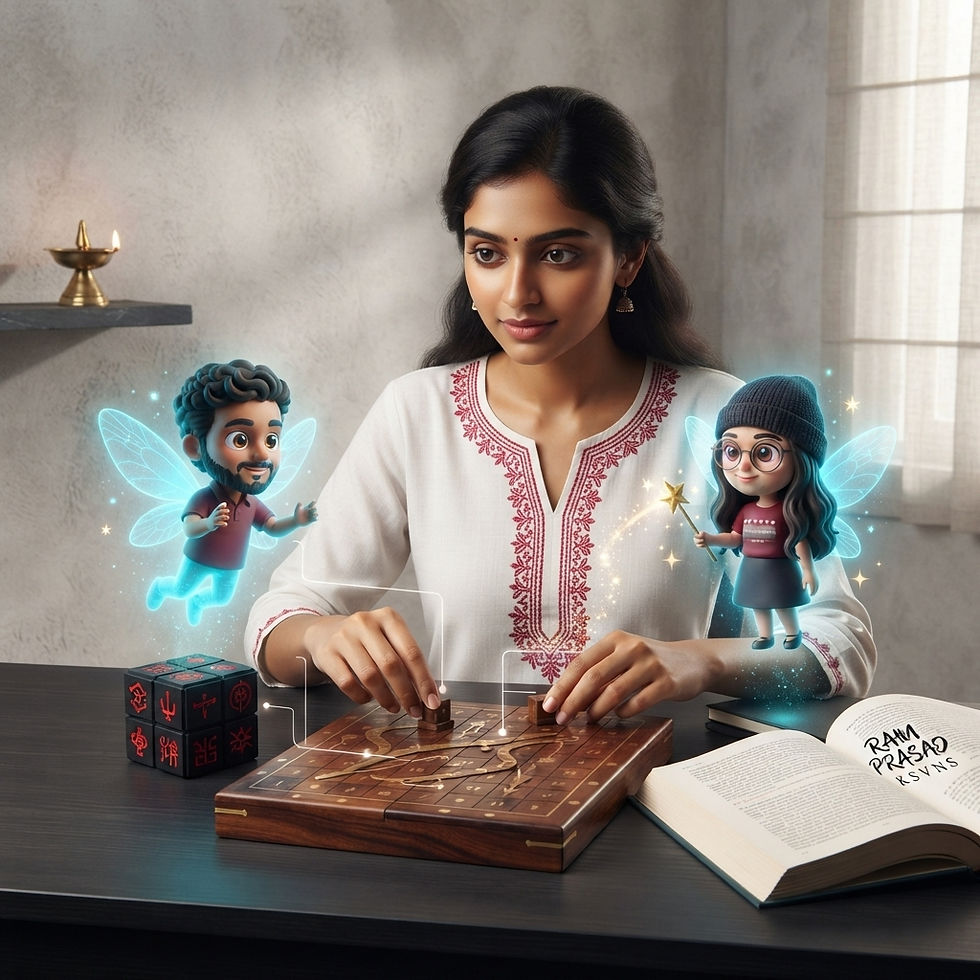
Ancient Indian pedagogy consistently emphasized experiential wisdom alongside rigorous practice. In the Mahabharata, Dronacharya tested his students not merely through theoretical drills, but through targeted, practical challenges that tested both skill and moral character. Gamified learning modernizes this philosophy by converting abstract academic concepts into tangible, problem-solving quests. However, gamification without underlying substance is mere entertainment. To achieve true mastery, you must ground gamified feedback within the disciplined context of textbook reading. This synthesis ensures you cultivate both the patience to read deeply and the agility to apply knowledge effectively in your community.
📍 Step-by-Step Guide to Implementing a Hybrid Learning Model

To implement an effective learning framework in your daily routine, start by defining your primary objective. First, spend 20 minutes engaging in deep, uninterrupted textbook reading to establish foundational concepts. Second, transition to a gamified application—such as an interactive quiz, puzzle, or hands-on tactile game like a Rubik's Cube—to test your active recall and problem-solving speed. Third, track your progress using a simple system that rewards consistency rather than perfection. Finally, share your learnings with peers or family members, turning individual study into a collaborative, community-building exercise that strengthens civic awareness and collective intelligence.
⚖️ MERITS VS. DEMERITS COMPARISON
✅ Key Merits (The Advantages):
Fosters high active engagement and immediate self-assessment.
Builds foundational mental discipline and patience through structured text.
Encourages creative problem-solving and collaborative teamwork.
⚠️ Potential Demerits (The Caveats):
Potential for superficial understanding if gamification focuses only on points.
Risk of passive boredom when textbook drills lack contextual application.
Requires careful balance to prevent digital fatigue.
🎯 HOW THIS DIRECTLY HELPS YOU (READER ADVANTAGES):
✓ Improves your long-term memory retention through active recall and immediate feedback.
✓ Reduces academic burnout by transforming static studying into rewarding personal milestones.
✓ Develops your critical reasoning abilities to address daily civic and professional challenges.
📊 STRATEGIC OPPORTUNITIES & RISK MATRIX:
📈 Growth Opportunities:
Integration of low-cost physical educational games into community hubs.
Development of hybrid curricula combining classical rigor with playful learning.
Enhanced lifelong learning habits across all age groups.
🚨 Risks & Pitfalls To Watch:
Trivialization of serious academic concepts through superficial reward systems.
Screen addiction from purely app-based gamified platforms.
Neglect of fundamental reading and analytical writing skills.
❓ FREQUENTLY ASKED QUESTIONS
Q1: Can gamified learning completely replace traditional textbooks?
No, gamified learning works best when combined with traditional textbooks. Textbooks provide depth and structure, while gamification enhances active recall and engagement.
Q2: Is gamified learning effective for adult self-study?
Yes, adults benefit significantly from gamification through enhanced motivation, immediate progress tracking, and interactive problem-solving techniques.
Q3: How does gamification improve knowledge retention?
Gamification triggers active participation and immediate feedback, which strengthens neural pathways compared to passive reading.
Q4: What are low-tech ways to gamify home learning?
You can use flashcards, time-based challenges, board games, or tactile puzzles like the Rubik's Cube to review concepts without digital screens.
Q5: How does gamification promote civic responsibility?
By introducing cooperative group challenges and ethical scenario simulations, learners practice teamwork, empathy, and social problem-solving.
© 2026 Ram Prasad K S V N S Recommends. All rights reserved.


Comments