

Monsoon Haircare: Beat the Frizz and Save Your Hair

"As the monsoon rains refresh our surroundings, high atmospheric humidity presents a distinct challenge to personal grooming. Uncontrolled frizz, dampness, and scalp irritation can subtly erode your confidence. Caring for your personal hair health during this season reflects discipline and self-respect, empowering you to present your best self to your family, workplace, and community every day."
1. What Is This About? A targeted monsoon haircare framework focused on controlling environmental moisture absorption, keeping the scalp clean, and reducing hair breakage.
2. Why It Matters: High ambient humidity weakens the hair structure and promotes fungal growth on the scalp, making proactive hygiene essential for personal well-being.
3. Who Is Impacted: Students, working professionals, and daily commuters exposed to rainwater and humid outdoor conditions.
4. Where Applicable: Applicable in daily home hygiene routines, commuting practices, and workplace self-presentation.
5. Action Roadmap: Follow a balanced regimen of mild cleansing, lightweight rosemary mists, micro-fibre towel drying, and protective hair serums.
"Cleanliness of body and mind forms the foundation for purposeful living and clear thought." — Charaka Samhita
📍 Understanding Monsoon Moisture and Hair Physics

Monsoon air is saturated with water vapor. Hair strands, being naturally porous, absorb this surrounding dampness quickly. When water penetrates the cuticle, it breaks and rearranges the temporary hydrogen bonds inside the keratin structure, turning smooth hair into frizzy, unmanageable strands. Additionally, rainwater in modern urban environments often carries atmospheric pollutants and acidity. When rain settles on your scalp, it disturbs the natural pH balance, leading to fungal buildup and root weakness. Recognizing these physical changes allows you to take protective measures before damage occurs.
📍 The Three-Step Monsoon Haircare Framework
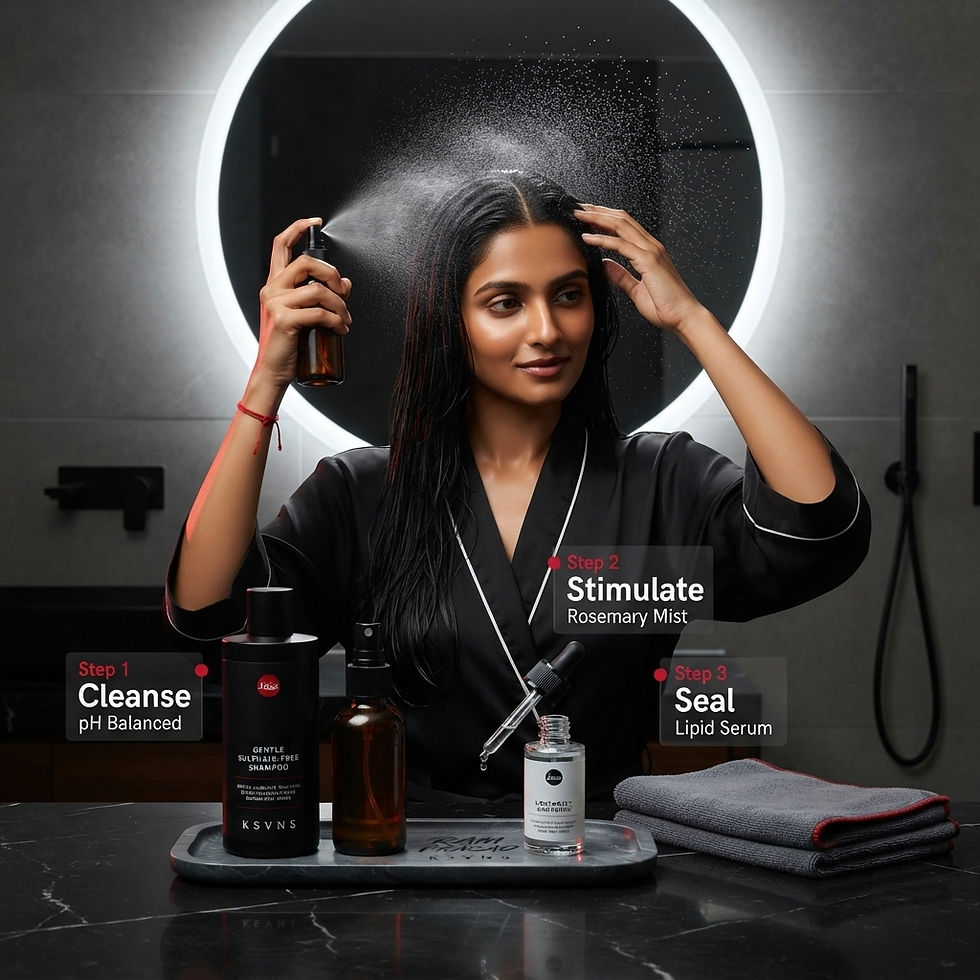
To maintain strong and presentable hair during the rainy season, implement a minimalist three-step strategy. First, wash your hair two to three times a week with a gentle, sulphate-free shampoo to remove accumulated sweat and urban grime. Avoid heavy oiling overnight, as oil seals atmospheric moisture onto the scalp. Second, apply a botanical mist like rosemary spray to damp roots to stimulate circulation and maintain scalp hygiene. Third, apply a few drops of a lightweight hair serum along the lengths to coat the cuticles, effectively sealing out external humidity without flattening your hair.
📍 Daily Practices for Civic Confidence and Personal Hygiene

Your personal grooming standards influence how you interact with society. Walking into professional or educational spaces with damp, unkempt hair leaves an unfavorable impression and invites scalp infections. Carry a compact micro-fibre towel when traveling during monsoon showers. If you get caught in the rain, rinse your hair with clean tap water as soon as you reach home to flush away pollutants. Keeping your hair clean, dry, and neatly styled reflects personal respect and contributes to a clean, healthy community environment.
⚖️ MERITS VS. DEMERITS COMPARISON
✅ Key Merits (The Advantages):
Protects natural hair moisture balance without heavy oil buildup.
Minimizes seasonal hair shedding through proactive scalp care.
Saves time and financial resources by avoiding expensive salon treatments.
⚠️ Potential Demerits (The Caveats):
Requires regular attention to weather changes and hair wetness.
Demands replacing heavy traditional hair oils with lightweight formulas.
May require a short adjustment period to establish a steady daily routine.
🎯 HOW THIS DIRECTLY HELPS YOU (READER ADVANTAGES):
✓ Simple, step-by-step clarity that cuts through excessive product clutter.
✓ Cost-effective hair protection strategies suitable for daily execution.
✓ Enhanced personal grooming and elevated scalp comfort throughout the rainy season.
📊 STRATEGIC OPPORTUNITIES & RISK MATRIX:
📈 Growth Opportunities:
Adopting lightweight, natural botanical sprays like rosemary water for root health.
Developing sustainable seasonal grooming habits that protect long-term vitality.
🚨 Risks & Pitfalls To Watch:
Overusing heavy chemical smoothers that damage the hair shaft over time.
Neglecting basic scalp cleanliness, resulting in persistent dandruff and breakage.
❓ FREQUENTLY ASKED QUESTIONS
Q1: Should I oil my hair regularly during the monsoon?
Limit oil application to 30 minutes before washing. Leaving heavy oils overnight in humid weather traps sweat and dust, leading to fungal scalp infections.
Q2: How often should I wash my hair during the rainy season?
Washing 2 to 3 times a week with a mild shampoo is ideal to keep your scalp clean from humidity, sweat, and environmental pollutants.
Q3: Does rainwater directly cause hair fall?
Rainwater in urban areas contains impurities and mild acidity that irritate the scalp and weaken roots if not washed off with clean water.
Q4: Why does hair become excessively frizzy in the monsoon?
High ambient humidity forces dry hair cuticles to absorb excess moisture from the air, causing individual strands to swell and curl outwards.
Q5: How does rosemary hair spray help during monsoon?
Rosemary spray delivers lightweight hydration, balances scalp oiliness, and strengthens roots without creating a sticky residue.
© 2026 Ram Prasad K S V N S Recommends. All rights reserved.


Comments